


Easy Parkour: Escape Run Obby
4.321.00 Reviews
App Specs
- Version
- 1.14
- Updated On
- License
- Free
- Downloads
- 5,000,000+
- Developer
- Blox Global
- Categories
- Casual
- Platform
- Android
Screenshots
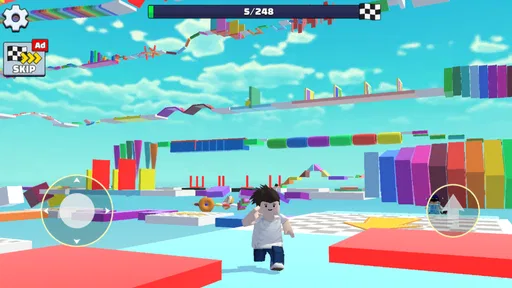
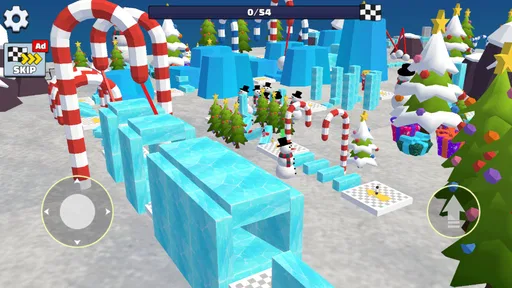
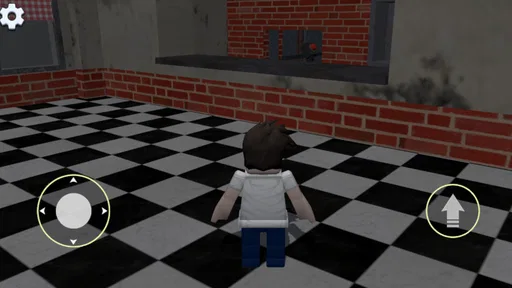
 Analysis by AppCompare
I approached Easy Parkour: Escape Run Obby expecting a light, pick-up-and-play obstacle game, and that is exactly where it works best. It is a casual game from Blox Global built around parkour challenges and straightforward movement, with a control style that feels approachable rather than demanding from the first tap. I could start a short session without learning a complicated system, yet the timing of jumps still gave me enough to focus on when a course became less forgiving.
The important distinction is that “easy” describes the entry point, not every moment of the experience. The basic idea is simple: move through obstacle sections, read the next landing, and try again when a jump goes wrong. That makes it a comfortable choice for quick breaks, younger players, or anyone who prefers an uncomplicated mobile game. At the same time, repeated attempts reveal small habits that make progress smoother. The real appeal is the short retry loop: observe, adjust, and make another attempt without a long setup.
How I settled into the basic run
My first useful habit was to stop treating each obstacle as a race. The smooth controls make it tempting to rush forward, but a quick pause before a jump is often more valuable than immediate movement. I found it easier to look at the next platform, decide where I wanted to land, and then commit to the jump rather than correcting direction at the last instant. That approach is especially helpful when the path narrows or the next surface is positioned at an angle.
This is where the game’s casual design earns its place. I did not need to memorize a large rule set or manage a character build before playing. The focus stays on movement and repetition. If I had a few spare minutes while waiting for an appointment, I could play a short section, put the phone down, and return without feeling that I had interrupted a larger strategy session.
A practical everyday scenario is a short evening break after finishing a task. I would play with the sound at a comfortable level, attempt the current obstacle several times, and stop after a clean run rather than forcing a frustrating extra session. That rhythm suits the game better than treating it like a long-form adventure. It gives the experience a clear purpose: a small challenge that can fill a gap in the day.
The controls also reward keeping the phone steady. When I held it with both hands and used light, deliberate inputs, I made fewer accidental corrections. This sounds obvious, but it matters in a parkour game where a tiny directional change can turn a good jump into a miss. Players who tend to grip tightly or swipe aggressively may initially blame the course when the bigger issue is inconsistent input.
What to check before trying to improve
Before chasing faster attempts, I recommend checking the device’s basic game settings and the phone’s own comfort settings. Easy Parkour: Escape Run Obby is rated for Everyone, and its simple presentation makes it accessible, but accessibility is not only about age. Screen brightness, touch sensitivity, notification interruptions, and the way the phone is held can all affect a timing-based game.
Worth Reading Before You Choose

EA SPORTS FC Mobile 26 Is a Bigger Football Game, but It Takes Time

Flipboard Shows What News Apps Must Do Beyond the Feed

Switching to Android Auto Means Rethinking Your Driving Routine

Google Calendar Makes a Crowded Week Easier to Manage

Ludo King Makes the Most of the Minutes Between Plans

Baby Panda World Brings Quick Play to Modern Phones, but Its Game Library Feels Busy
I prefer a brightness level that makes platforms easy to distinguish without creating glare. A dim screen can make a landing look less clear, while excessive brightness becomes tiring during repeated attempts. I also turn off distracting notifications when I want a focused run. This is not a special feature of the game; it is a practical adjustment that prevents an incoming message from breaking concentration at the worst possible moment.
If the game offers adjustable sound controls on your device or within its available interface, I would test them early rather than waiting until a difficult section. Some players use audio as a rhythm cue, while others find repeated effects distracting. My preference is to keep enough sound for feedback but lower it when I am practicing the same obstacle repeatedly. The best setting depends on whether sound helps you anticipate movement or pulls attention away from the landing.
It is also worth checking how the game behaves on your particular phone before assuming a missed jump is a skill problem. The minimum operating-system requirement is Android 6.0, so the supported range includes older Android devices, but hardware age can still affect comfort. A player using an older phone should close unnecessary apps, keep the screen clean, and avoid playing while the device is struggling with heat or background activity. Those steps do not change the course, but they can make touch response feel more consistent.
The game is free to download, which makes trying it low-risk. However, optional purchases range from $0.99 to $169.99 per item, so I would be careful around any purchase prompts, especially on a shared device. For a child, I would review the phone’s purchase protections before handing it over. The free starting point is convenient, but “free” should not be treated as a reason to ignore account or device safeguards.
Small habits that make repeated attempts faster
Once I understood the basic movement, I stopped restarting mentally after every mistake. Instead, I treated each failed attempt as information about one specific problem: a late turn, an overcorrection, or a jump started from the wrong position. This made practice less frustrating because I had a clear adjustment for the next try. If the same error happened three times, I changed my approach rather than simply moving faster.
One useful pattern is to prepare the next input before the character reaches the edge, while still leaving enough room to correct. Waiting until the last possible instant feels exciting, but it gives very little margin. A controlled approach lets me use the final part of the movement for alignment instead of panic. This is particularly useful when the next platform is small or when a straight run needs to become a turn.
I also found value in separating observation attempts from speed attempts. On the first pass through an unfamiliar section, I focused on identifying the sequence and safe landing points. After that, I tried to remove unnecessary pauses one at a time. This is faster in the long run than attempting a perfect speed run without knowing where the difficult transitions are.
Another practical tip is to keep a consistent starting posture. If I began one attempt with the phone tilted and the next with it flat on a table, comparisons became unreliable. Holding the device in the same way made it easier to tell whether a change in timing actually helped. Experienced players often look for complicated shortcuts, but consistency is the shortcut that matters most here.
When a jump feels impossible, I do not immediately assume the game requires a hidden trick. I first test three ordinary possibilities: approach from a slightly different angle, reduce the amount of directional input, and begin the jump from a more central position. These changes are simple, but they expose whether the problem is route reading or control precision. That distinction prevents wasted attempts.
Where the casual format helps and where it limits me
The game’s narrow focus is both its strength and its limitation. It is easy to understand because it does not ask me to divide attention between parkour and a deep collection, combat, or management system. That makes it a better fit than a larger action game when I want a quick mechanical challenge. On the other hand, players who need a strong narrative, extensive customization, or a broad progression system may find the experience too focused.
I would also avoid recommending it as a replacement for a serious competitive platforming game. Easy Parkour: Escape Run Obby is more relaxed and immediately accessible than a title built around advanced movement mastery. That is useful for casual play, but it means players looking for highly technical routes or a long-term competitive ladder should look elsewhere. The game works best when the goal is personal improvement through retries, not a formal contest against a large skill-based community.
Compared with other casual obstacle games, its advantage is the low barrier to entry. I could understand what to do almost immediately, and the smooth control style supports short sessions. The trade-off is that a simple format can feel repetitive if I play for too long without a personal target. I get more from it when I set a modest objective, such as clearing one difficult section cleanly or reducing hesitation on a familiar route.
The public response suggests that many players find the overall package appealing: it holds an average rating of 4.3 from around 7.7 thousand ratings, and it has passed 5 million installs. Those figures do not replace personal testing, but they do place the game among widely tried casual options. I would interpret that reach as a sign that the basic concept is easy to pick up, not as proof that every player will enjoy extended sessions.
The current version is 1.13, and the game was released on October 31, 2025. I mention those details because they help identify the version being discussed when someone is comparing the app on a device or deciding whether an older installation is worth updating. The developer is Blox Global, and the game remains free to start, with the purchase range worth keeping in mind before allowing unrestricted spending.
Advanced play without pretending there are secret systems
There is a limit to how much “advanced” technique can reasonably be applied here. I would not invent hidden shortcuts, secret movement states, or special settings that are not part of the visible experience. The deeper improvement comes from building a repeatable routine around the controls that are actually available.
My preferred routine has four stages. First, I make one calm attempt to read the route. Second, I identify the exact transition that caused the failure. Third, I repeat only that movement with a smaller, more deliberate input. Finally, I run the whole section again without changing several variables at once. This method feels slower at the beginning, but it produces clearer feedback than random experimentation.
I also pay attention to the difference between a missed landing and a poor setup. A jump can fail because the character left the previous platform from an awkward edge, not because the destination was reached incorrectly. When that happened, I adjusted the approach to the earlier obstacle. This is a non-obvious lesson for newcomers: improving the obstacle before the difficult jump can be more effective than practicing the jump itself.
Another advanced limit is physical fatigue. Repeating the same movement while frustrated often makes my inputs heavier and less precise. A short break can be more productive than another ten attempts made with a tense grip. Since the game is designed for casual sessions, I see no reason to force a marathon. Its structure supports stopping and returning later, which is a benefit rather than a weakness.
Players should also be realistic about device differences. A control pattern that feels comfortable on a large screen may feel cramped on a smaller phone. If the game feels harder after changing devices, I would rebuild the basic routine instead of assuming the course has changed. Keep the phone stable, use the same hand position, and adjust brightness and sound before judging the controls.
Who should download it and who should pass
I think Easy Parkour: Escape Run Obby is a good match for someone who wants a free casual game with immediate movement and short obstacle challenges. It is especially suitable for players who enjoy retrying a section until their timing improves, rather than collecting a large number of items or following a complicated story. The Everyone age rating also makes its presentation broadly approachable, though adults should still supervise purchases on shared devices.
It is less suitable for anyone who dislikes repetition. The central pleasure comes from trying again, and a player who expects every attempt to introduce a new mechanic may lose interest. I would also skip it if my main priority were deep customization, a substantial narrative campaign, or a demanding competitive ranking system. A more specialized platformer would offer more depth in those areas.
For families, the free entry point is convenient, but I would establish purchase rules before letting a child play independently. For commuters or people with irregular free time, the short-session structure is more compelling. For experienced platforming players, the game can still be enjoyable as a relaxed warm-up, although it may not provide enough technical complexity to become their main game.
My verdict after building a repeatable routine
Easy Parkour: Escape Run Obby succeeds because it keeps its central promise clear: move through parkour obstacles with controls that are easy to approach and satisfying to refine. I enjoyed it most when I treated each attempt as a small experiment rather than a test of patience. Stable hand positioning, sensible device settings, route reading, and focused repetition made a bigger difference than rushing.
Its limitations are equally clear. The focused casual format may become repetitive during long sessions, and players seeking elaborate progression or serious competition will probably want a different option. The presence of in-app purchases also means I would check spending protections before sharing the game with a child. Those are reasonable trade-offs, but they should be part of the decision.
My recommendation is simple: try it if you want a lightweight obstacle game that can fit into a spare moment and still reward better timing. Start slowly, learn the shape of each section, and only then work on speed. For me, it is at its best as a friendly practice game rather than an all-day commitment. That balance makes it an easy casual recommendation, provided you are comfortable with retry-based play and keep the purchase options under control.
Pros
- Simple controls make it easy for beginners to start playing.
- Short obstacle courses are convenient for quick gaming sessions.
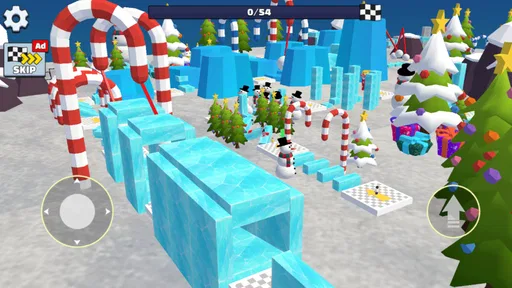
- Bright visuals make platforms and hazards easy to recognize.
- Progressive challenges help players improve timing and movement.
- Lightweight gameplay is suitable for casual play on many devices.
Cons
- Some levels may feel repetitive after extended play.
- Precise jumps can be frustrating when controls respond inconsistently.
- Frequent retries may become tedious on difficult obstacle sections.
- The game may offer limited depth for experienced platformer players.
- Ads or optional purchases could interrupt the overall experience.
FAQs for Easy Parkour: Escape Run Obby
What is Easy Parkour: Escape Run Obby?
Easy Parkour: Escape Run Obby is a casual obstacle-course game focused on running, jumping, climbing, and avoiding traps. Players guide a character through colorful stages filled with platforms, gaps, moving obstacles, and checkpoints. Despite its name, some sections still require timing and patience, making it suitable for players who enjoy short, fast-paced challenges rather than a complex story or strategy experience.
Is Easy Parkour: Escape Run Obby suitable for beginners and children?
The game is designed to be approachable, with simple controls and straightforward objectives, so beginners can usually understand the gameplay quickly. However, later obstacles may require accurate jumps and repeated attempts. Parents should review the app’s age rating, advertisements, permissions, and any available in-app purchase settings before allowing younger children to play, since these details can vary between Android and iOS versions.
How do you play Easy Parkour: Escape Run Obby?
Gameplay generally involves controlling the runner through an obstacle course while avoiding hazards and reaching the finish point. Depending on the version and level, you may need to jump across platforms, move around traps, wait for obstacles to pass, and use checkpoints to continue after failing. The controls are typically touch-based, but careful movement is more important than speed in difficult sections.
Does Easy Parkour: Escape Run Obby require an internet connection?
The basic parkour experience may work without a constant connection, particularly when playing already available levels, but online access can still be required for advertisements, analytics, updates, leaderboards, or other optional features. Because requirements can change after an update, it is best to test the game in airplane mode before traveling. Also check the store listing for the latest offline-play information.
Is Easy Parkour: Escape Run Obby free to download, and does it contain ads?
Easy Parkour: Escape Run Obby is generally offered as a free download, but free access commonly comes with advertising or optional purchases. Ads may appear between attempts, after completing a level, or when selecting a reward. Before downloading, check the current Google Play or App Store listing for in-app purchase details, privacy information, and whether an option exists to remove advertisements or unlock additional content.


